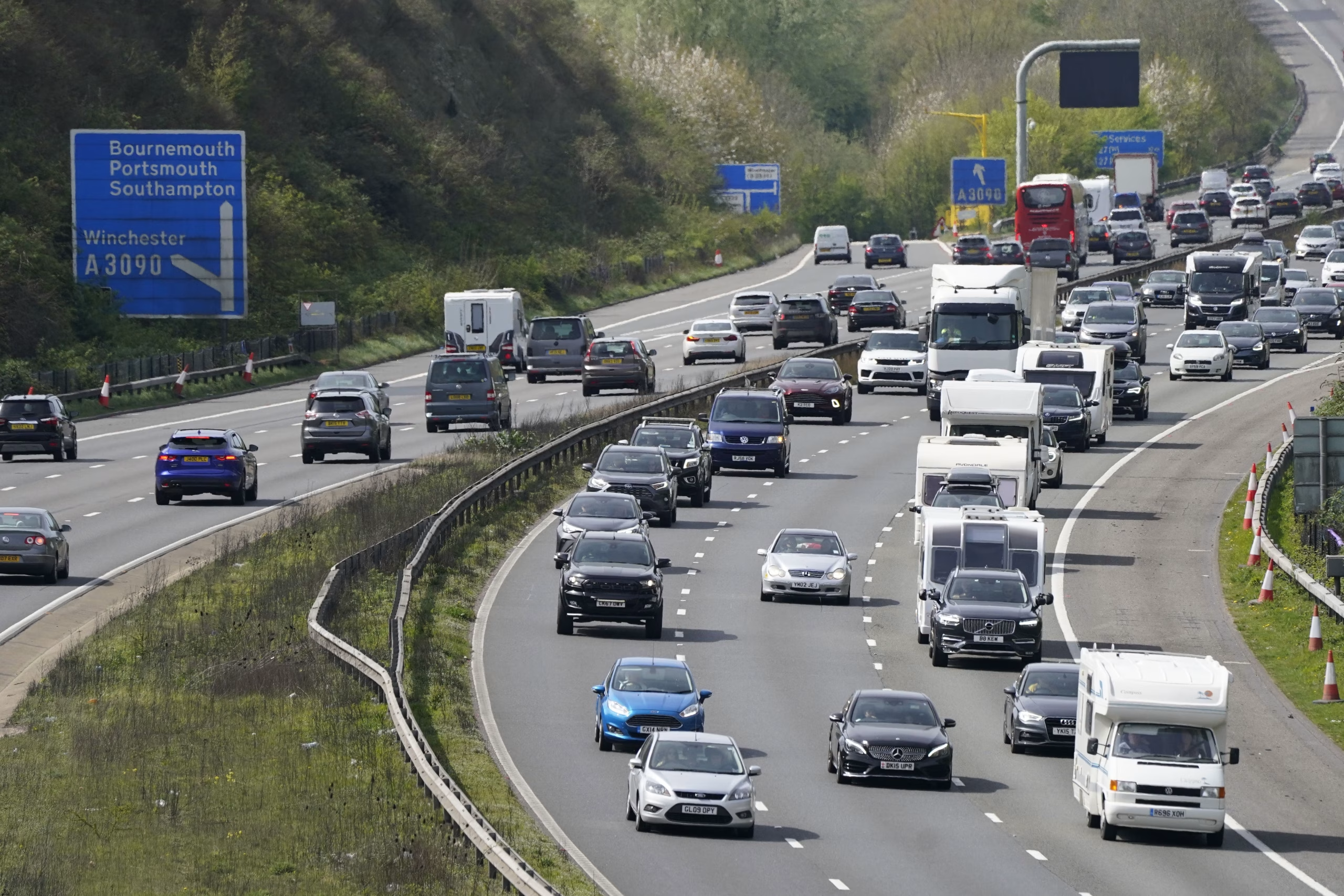
Emergency road closures allow public authorities to restrict travel when crashes, floods, fires, hazardous materials, police activity, infrastructure failure, or other dangers make normal movement unsafe. The legal power to close a road usually comes from state or local statutes, emergency powers, law-enforcement authority, or the agency responsible for the roadway.
Federal standards also influence how closures, detours, and temporary traffic controls are marked.
Who Has Authority to Close a Road?
Depending on the jurisdiction, a closure may be ordered or implemented by police, highway agencies, transportation departments, emergency managers, fire officials, or other officials granted statutory authority.
FHWA explains that state and local highway agencies—not FHWA itself—select, install, operate, and maintain traffic-control devices on public roads. The current national traffic-control framework is available through the Federal Highway Administration MUTCD.
People checking regional information sources during a major incident should confirm closure status through the transportation agency, police department, emergency-management office, or another official source before traveling.
Closure Signs and Barricades Have a Safety Function
The Manual on Uniform Traffic Control Devices establishes national standards for traffic-control devices used on streets and highways open to public travel. The current 11th Edition includes Revision 1, adopted in March 2026.
Temporary routes and detours must have necessary traffic-control devices in place before being opened to public travel. Drivers may also encounter information through public notice coverage, but roadside controls and official instructions govern the immediate traffic situation.
Driver Duties Come Primarily From State Law
The MUTCD standardizes traffic-control devices, but the legal duty to obey regulatory devices generally comes from state statutes and, where appropriate, local ordinances. FHWA guidance expressly recognizes that road-user duties should be specified by those laws.
| Situation | Driver Expectation | Legal Source |
|---|---|---|
| Road Closed sign | Do not proceed unlawfully | State/local traffic law |
| Police direction | Follow lawful instructions | Police/traffic authority |
| Emergency detour | Use designated route | Traffic-control system |
| Restricted zone | Enter only if authorized | Emergency order or statute |
Access Exceptions Are Not Universal
Residents, property owners, utility crews, emergency personnel, contractors, journalists, delivery operators, and employees sometimes ask whether they may pass a closure. There is no nationwide exemption covering every category.
Access may depend on the reason for closure and the authority that issued it. A fire evacuation zone can have different restrictions from a flooded bridge, crime scene, construction failure, or hazardous-material perimeter.
Travelers following current-affairs resources should not assume that a reported exception applies at every checkpoint. On-scene officers may be implementing a narrower safety perimeter based on current conditions.
Emergency Traffic Control Must Adapt to Conditions
FHWA incident-management guidance emphasizes temporary traffic controls, advance warnings, blocked-lane protection, and management of traffic approaching an incident.
A closure can expand, contract, or move as danger changes. That means a route shown open earlier may later become restricted, and an unofficial shortcut may place a driver inside a controlled incident area.
Common Mistakes Around Road Closures
A frequent mistake is treating a barricade as optional because the road appears physically passable. Closure decisions can reflect hazards that are not visible from a vehicle, including unstable pavement, downed power lines, fire behavior, contaminated water, police operations, or damaged bridges.
Another mistake is following another vehicle through a restricted point. Authorization given to an emergency crew, utility company, or resident does not automatically extend to the next driver.
When a Closure Dispute Needs Legal Help
Legal advice may be appropriate when a closure blocks essential property access for an extended period, a citation or arrest follows alleged unauthorized entry, a business claims substantial losses, or property is damaged during government traffic-control operations.
Government agencies may also need counsel when drafting evacuation orders, establishing restricted zones, or deciding which access exceptions are legally permitted.
Frequently Asked Questions
Can police close a public road during an emergency?
Generally, authorized law-enforcement or transportation officials can impose closures when applicable state or local law gives them that power. The precise authority varies by jurisdiction.
Can residents drive past a Road Closed sign to reach home?
Sometimes an agency permits local access, but “local traffic” or resident access is not automatic. Drivers should follow posted restrictions and instructions from officials controlling the closure.
Are emergency road-closure signs federally standardized?
The MUTCD establishes national traffic-control standards, while state and local agencies generally select and operate the devices on roads under their jurisdiction.
Follow the Authority Controlling the Road
A road closure is a legal traffic restriction as well as a safety measure. Drivers should rely on current signs, barricades, official alerts, and lawful instructions at the scene rather than assuming a route is safe because it looks open.
This article is for general informational purposes and is not a substitute for professional legal advice.